From the Amazon to Brazil’s Advanced Research Infrastructure: UNIFAP Researcher Featured by CNPEM

Professor Robert Saraiva Matos highlights the importance of national research facilities in strengthening materials science developed at the Federal University of Amapá

Research developed at the Federal University of Amapá (UNIFAP) has gained national visibility through the Brazilian Center for Research in Energy and Materials (CNPEM), one of Brazil’s leading institutions for advanced scientific research.

In an interview featured by CNPEM, Professor Robert Saraiva Matos, from UNIFAP’s Department of Physics, highlighted the importance of providing researchers from Brazil’s North Region with access to state-of-the-art scientific infrastructure. His participation reflects a broader movement toward strengthening the presence of Amazonian universities within Brazil’s major national research facilities.

During the interview, Matos emphasized the significance of traveling from northern Brazil to CNPEM with institutional support to conduct experiments and perform advanced characterization of materials developed at UNIFAP. His remarks draw attention to a central challenge in Brazilian science: ensuring that researchers working far from the country’s major scientific centers can access cutting-edge facilities and participate fully in national research networks.

The research carried out at CNPEM is part of the project “Precursor-Driven Defect-Morphology Interplay in Eco-Friendly CeO₂ Nanostructures,” coordinated by Professor Matos. The proposal was approved for experiments at the Brazilian Nanotechnology National Laboratory (LNNano/CNPEM) and received the highest score in its final evaluation.

The study focuses on cerium dioxide (CeO₂) nanostructures produced through environmentally friendly synthesis approaches, investigating how precursor chemistry affects particle morphology, crystal defects, oxygen vacancies, and the chemical state of cerium. These characteristics are particularly important because they can directly influence the catalytic and photocatalytic performance of the material, including its potential application in pollutant degradation and environmental remediation.

At LNNano, the research makes use of advanced electron microscopy and spectroscopy techniques, including high-resolution transmission electron microscopy (HRTEM), selected-area electron diffraction (SAED), scanning transmission electron microscopy coupled with energy-dispersive X-ray spectroscopy (STEM-EDS), and electron energy-loss spectroscopy (EELS). These techniques make it possible to investigate the materials at nanometric and even atomic length scales, providing information that cannot be obtained through conventional laboratory characterization alone.

A key objective is to understand the relationship between synthesis, morphology, crystal defects, oxidation state, and functional performance. By identifying how local structural features and variations in the Ce³⁺/Ce⁴⁺ ratio affect the properties of CeO₂, the project seeks to contribute to the rational design of more efficient and sustainable functional materials.

For UNIFAP, participation in CNPEM’s research infrastructure goes beyond the characterization of a single material. It contributes to the development of expertise in advanced microscopy, expands scientific collaborations, and increases the visibility of research carried out in Amapá.

The CNPEM interview also reinforces an important message: geographical distance should not determine the scientific opportunities available to Brazilian researchers. Providing access to national laboratories enables knowledge and materials developed in the Amazon to be investigated using some of the most sophisticated scientific tools available in the country.

In this context, the work conducted by UNIFAP demonstrates how research originating in the Brazilian Amazon can connect regional biodiversity, sustainable materials development, nanotechnology, and advanced characterization with scientific questions of national and international relevance.

“Coming from the North to CNPEM to develop our research represents much more than access to advanced equipment. It demonstrates that high-level science can be produced in the Amazon and connected to the major scientific infrastructures of Brazil.”

By strengthening these connections, UNIFAP continues to expand its participation in national research networks and to demonstrate the potential of Amazonian science to contribute to technological innovation, advanced materials, and sustainable solutions for environmental challenges.

Watch the CNPEM interview:
CNPEM – Brazilian Center for Research in Energy and Materials

Researcher: Prof. Dr. Robert Saraiva Matos
Institution: Federal University of Amapá (UNIFAP)
Research area: Materials Science, Nanotechnology, and Functional Materials
Research facility: Brazilian Nanotechnology National Laboratory (LNNano/CNPEM)
Deixe um comentário

O seu endereço de e-mail não será publicado. Campos obrigatórios são marcados com *

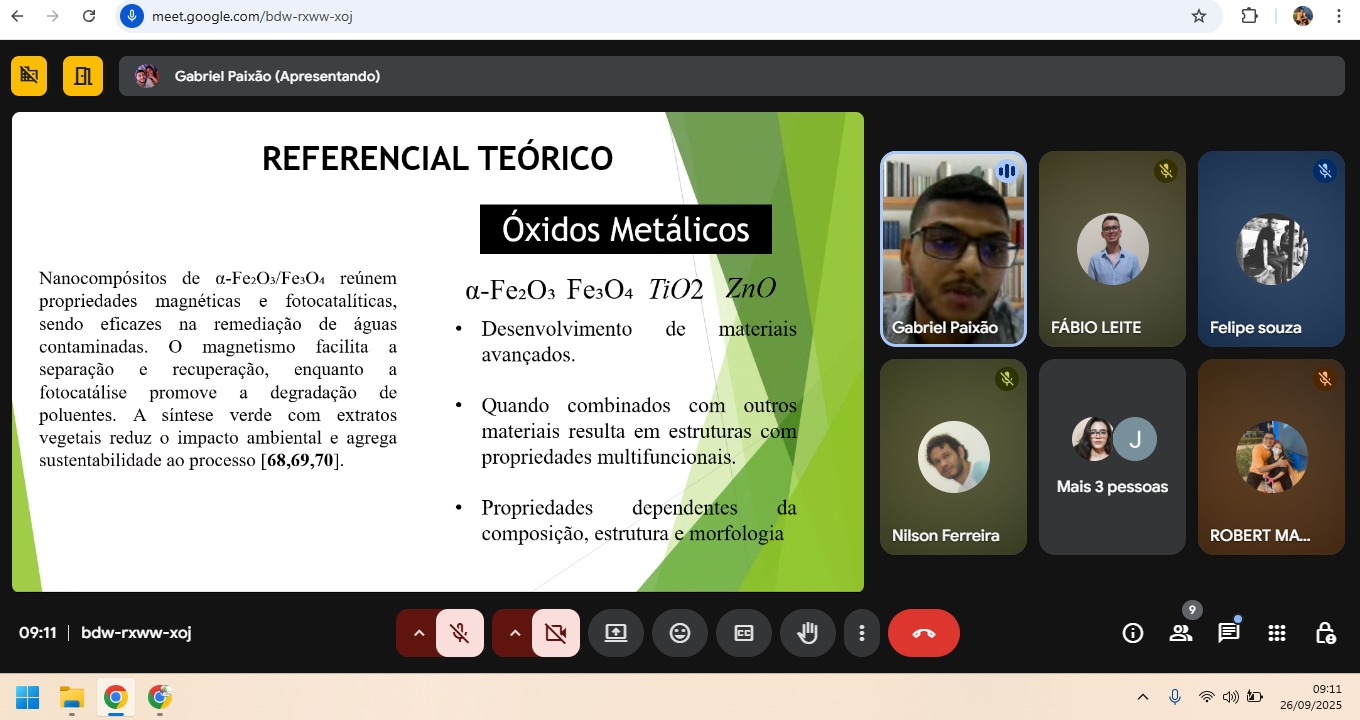
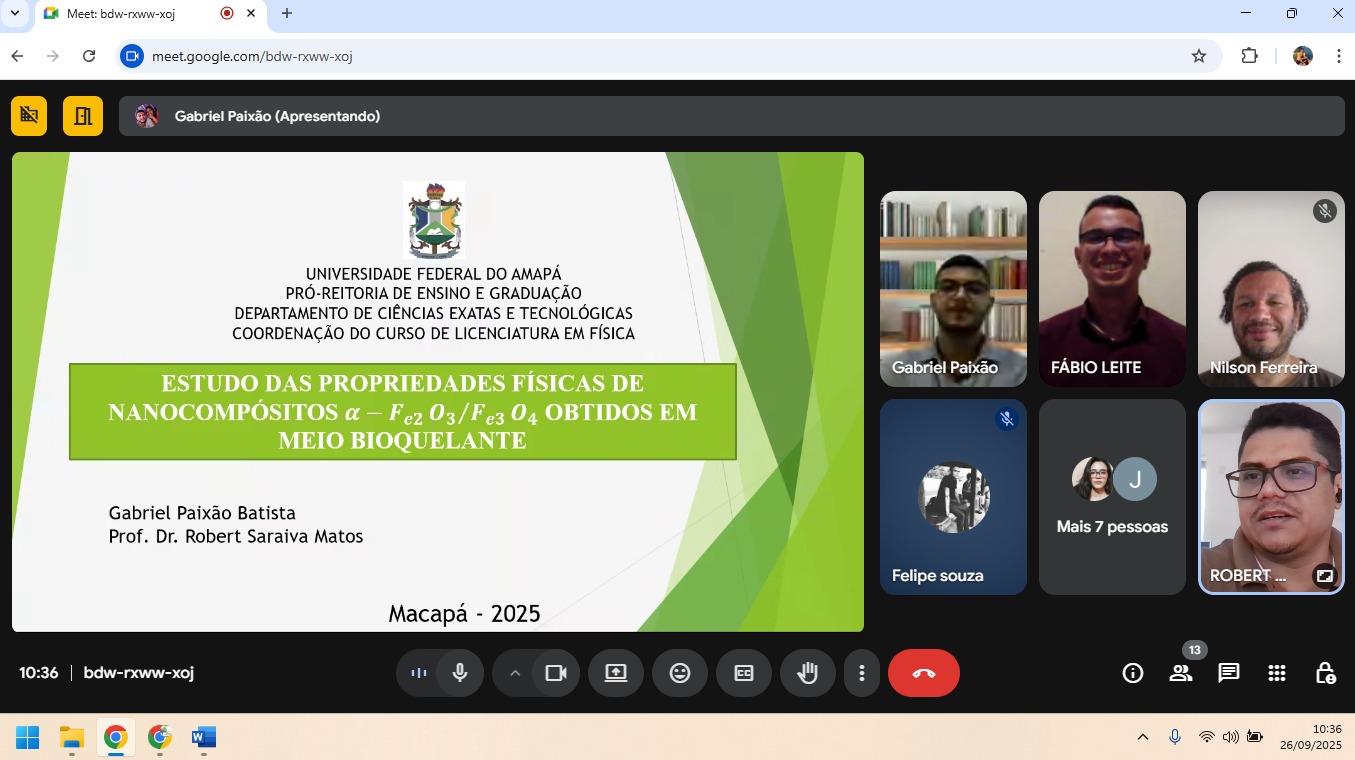
Gabriel Paixão Defends His Final Undergraduate Work on Green Nanocomposites

The Amazonian Materials Research Group proudly congratulates student Gabriel Paixão Batista on the successful defense of his final undergraduate work, entitled “Estudo das Propriedades Físicas de Nanocompósitos α‒Fe₂O₃/Fe₃O₄ Obtidos em Meio Bioquelante”. This defense, held in september 26, 2025 at the Federal University of Amapá, represents a remarkable academic milestone for both the student and our research group.

Under the supervision of Prof. Dr. Robert Saraiva Matos, Gabriel’s research investigated the structural and magnetic properties of hematite (α-Fe₂O₃) and magnetite (Fe₃O₄) nanocomposites synthesized through a sustainable bio-assisted sol-gel route, using Maytenus rigida Mart. extract as a natural biochelating agent. The study systematically explored how calcination temperatures (400–600 °C) influence nanoparticle size, morphology, phase composition, and magnetism, employing advanced characterization techniques such as FTIR, Raman spectroscopy, TEM, and VSM.

The results revealed that Maytenus rigida extract enabled an eco-friendly synthesis of nanocomposites with tunable properties. Particle sizes ranged from ~9 nm to over 130 nm depending on the calcination temperature, while magnetic hysteresis curves showed decreasing saturation magnetization but increasing coercivity, reflecting the evolving balance between α-Fe₂O₃ and Fe₃O₄ phases. These findings are of high relevance for applications in environmental remediation, particularly in contaminated water treatment and pollutant removal.

Beyond the scientific contributions, this work exemplifies our group’s dedication to training and empowering young researchers in the Amazon region. Gabriel’s commitment to rigorous experimentation and his ability to connect sustainability with frontier materials science reflect the mission of the Amazonian Materials Research Group: to foster innovation, responsibility, and excellence in research that addresses both technological and socio-environmental challenges.

We warmly congratulate Gabriel Paixão Batista on this important academic achievement. His work enriches the ongoing research in our laboratories and serves as an inspiring reference for future students. The Amazonian Materials Research Group remains committed to guiding new generations of scientists devoted to sustainable innovation and the advancement of knowledge.

Stay tuned for photo highlights from Gabriel Paixão’s undergraduate work defense.

Deixe um comentário

O seu endereço de e-mail não será publicado. Campos obrigatórios são marcados com *

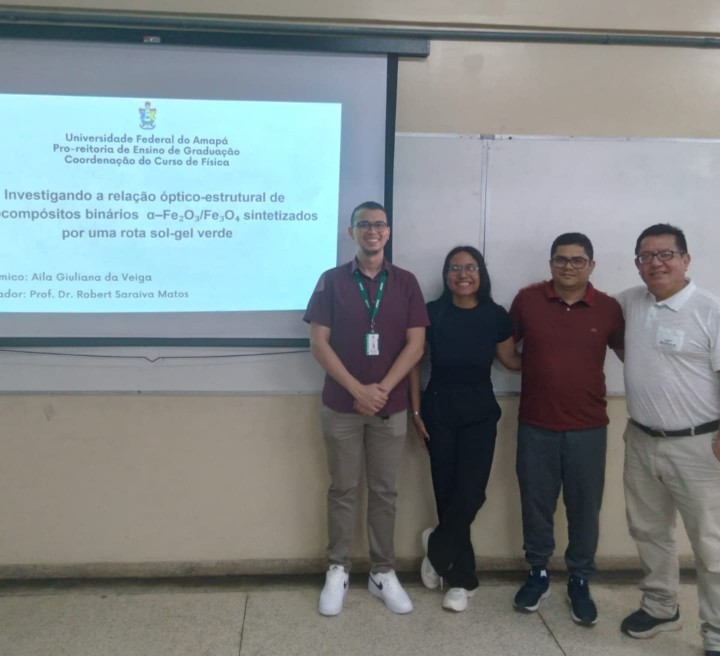
Congratulations to Aila Brandão on Her Final Undergraduate Work

The Amazonian Materials Research Group proudly congratulates student Aila Brandão on the successful defense of her final undergraduate work, entitled Investigando a relação optico-estrutural de nanocompósitos binários α‒Fe2O3/Fe3O4 sintetizados por uma rota sol-gel verde The defense was held on April 25, 2025, on the Federal University of Amapá, marking a significant academic achievement for both the student and our research group.

Developed under the supervision of the group leader Robert Matos, Aila’s research focused on exploring the structural and optical properties of environmentally synthesized binary nanocomposites composed of hematite (α-Fe₂O₃) and magnetite (Fe₃O₄). The study employed a green sol-gel synthesis route, aligned with the principles of sustainable chemistry, to obtain these nanomaterials. Through detailed characterization and analysis, the project aimed to elucidate how structural variations impact optical behavior, a relationship of great relevance for photocatalytic applications, especially in the treatment of polluted water and environmental remediation.

The thesis underscores the growing importance of eco-friendly synthesis techniques and advanced materials characterization in the field of nanoscience. Aila’s dedication and her ability to engage critically with scientific challenges reflect the core mission of the Amazonian Materials Research Group: to empower and train students in the Amazon region to conduct innovative, responsible, and impactful research.

Beyond its technical contributions, this defense also reflects our group’s enduring commitment to human capital formation in the field of materials science. In a region marked by urgent socio-environmental challenges, the development of local experts capable of addressing complex technological and ecological issues is not just valuable, it is essential. By guiding promising students like Aila, we aim to foster scientific excellence and inclusivity in northern Brazil’s academic landscape.

We extend our heartfelt congratulations to Aila Brandão for achieving this important academic milestone. Her work significantly enriches the research carried out in our laboratories and serves as an inspiring example for future cohorts. The Amazonian Materials Research Group remains firmly committed to supporting students devoted to sustainability, scientific rigor, and the advancement of knowledge.

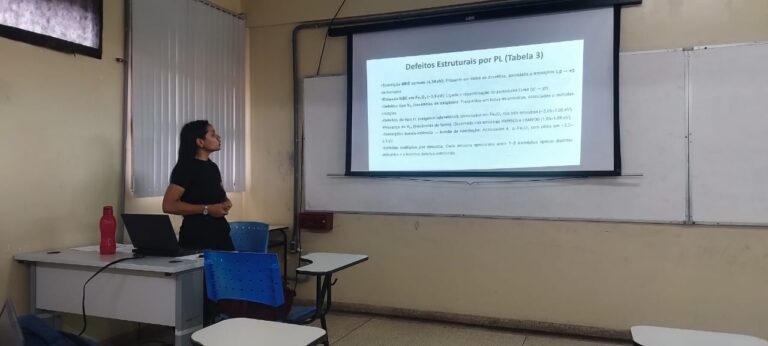
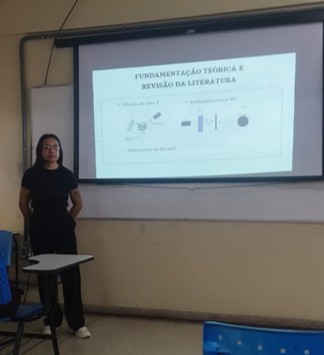
Below you can find some photo highlights from Aila Brandão’s thesis defense:

Deixe um comentário

O seu endereço de e-mail não será publicado. Campos obrigatórios são marcados com *

Professor Robert Matos Is Awarded the Prestigious CNPq Productivity Grant

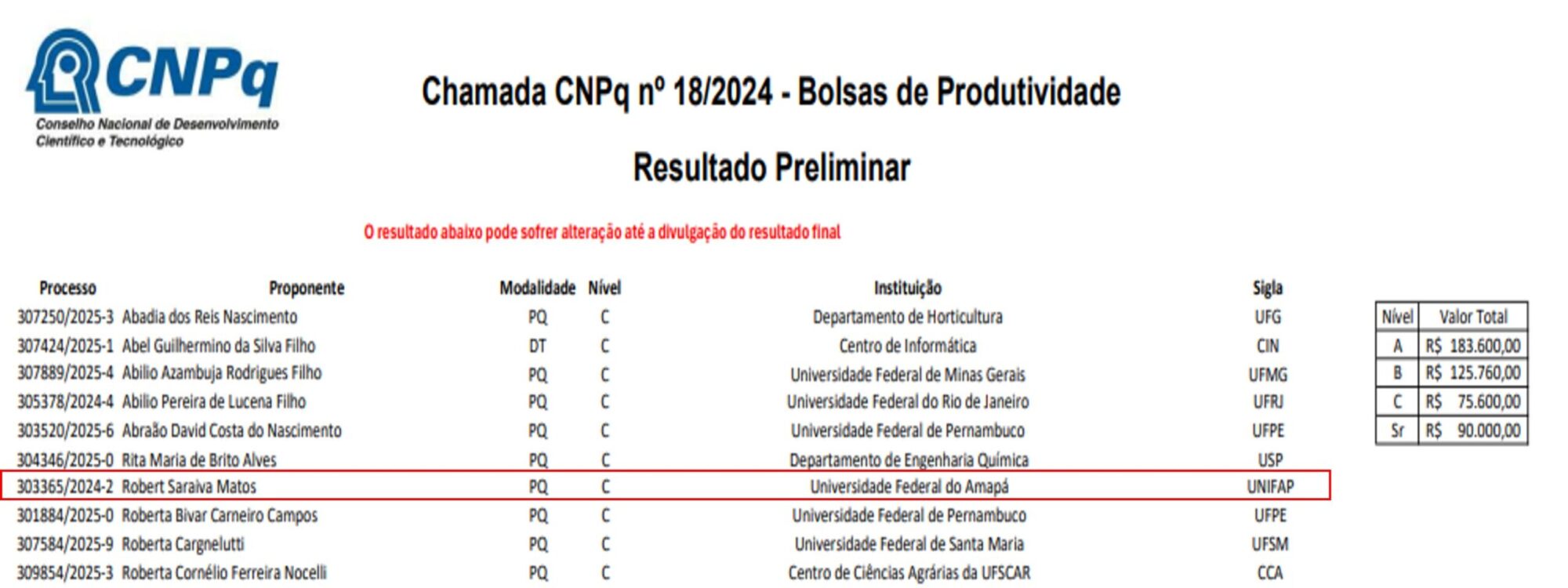
The Amazonian Materials Research Group proudly announces that Professor Robert Matos has been awarded a CNPq Productivity Grant (PQ – Level C) through the highly competitive Chamada CNPq nº 18/2024. This prestigious recognition underscores his sustained excellence in scientific research and his unwavering commitment to advancing national development. The CNPq Productivity Grant is one of the most prestigious research grants in Brazil, recognizing researchers who demonstrate outstanding scientific production and leadership in their respective fields. Professor Matos competed with scholars from across the country and stood out for the originality and relevance of his research. In his upcoming project, Professor Matos will investigate the green synthesis of cerium oxide (CeO₂) for photocatalytic applications, contributing to environmentally sustainable technologies with potential impact in energy and water treatment solutions. His work integrates innovation in nanostructured materials and thin film technologies, areas in which he has already established significant academic contributions.

“As the leader of the Amazonian Materials Research Group, I am deeply honored to receive this Productivity Grant. It represents an opportunity to further contribute to the advancement of scientific research in Brazil. I extend my sincere gratitude to both my Brazilian and international collaborators whose support was instrumental in achieving this recognition,” said Professor Matos in a brief statement following the announcement.

Holding a PhD in Materials Science and Engineering from the Federal University of Sergipe, Professor Matos has been recognized for his research in thin films, nanostructured materials, and their photocatalytic applications. His group has played a key role in advancing scientific knowledge in the Amazon region, aligning high-level research with local and global sustainability challenges.

According to the preliminary result published by CNPq, his proposal (Process No. 303365/2024-2) was approved under Level C, with a total grant amount of R$ 75,600.00. This recognition not only honors Professor Matos’s academic journey but also reinforces the growing relevance of research carried out in Brazil’s North region.

Deixe um comentário

O seu endereço de e-mail não será publicado. Campos obrigatórios são marcados com *